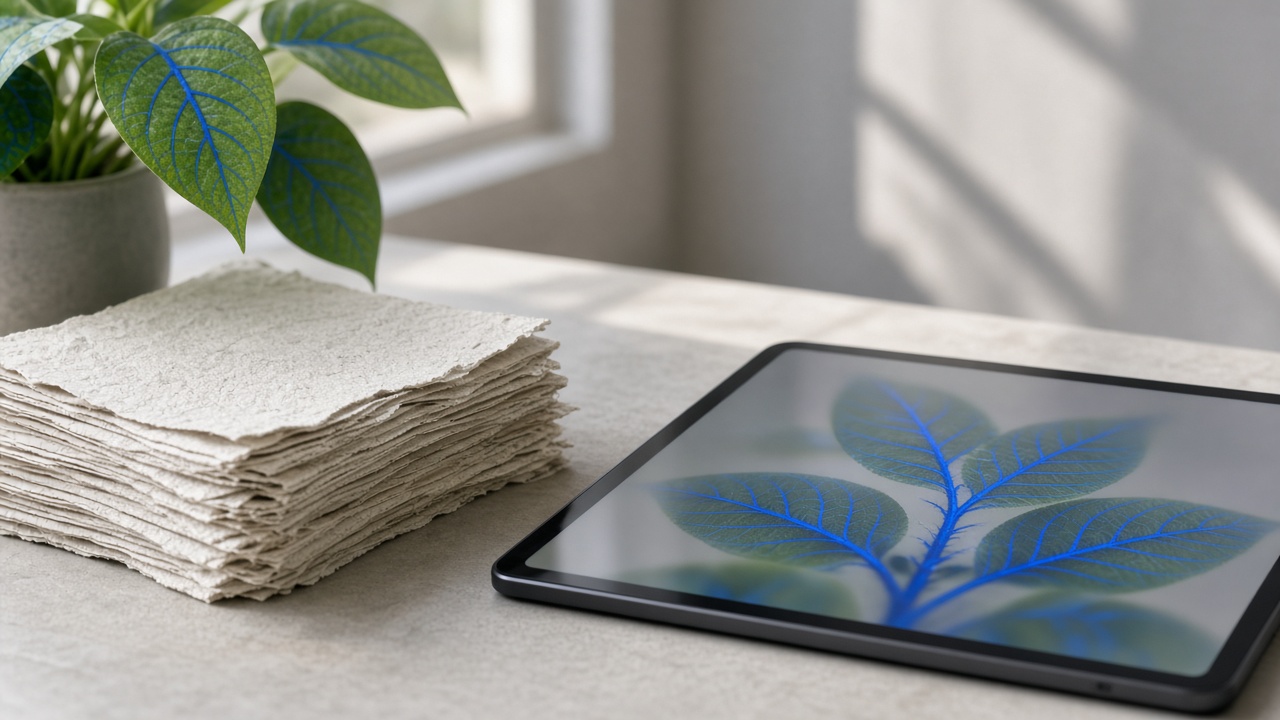
The paper the company still buys without thinking
The sustainability conversation usually starts with energy and travel. In daily operations the paper is more stubborn: contracts «just in case», packs of cards thrown away when a title changes, leaflets that age between two fairs. Going digital is stopping the production of copies the data has already contradicted.
Reprinting a paper card every time a phone number or a role changes is pure waste. The cycle — design, print, hand out, obsolete, order again — is the problem. No ESG report looks serious if that is still intact while the website says «we are digital».
What a dynamic profile stops you reprinting
A dynamic digital profile updates without a reprint. The QR, the Wallet pass, the lock-screen code and the NFC tap point to the same destination. If the title changes, the destination changes; the gesture the other person already has — the code on a stand, the pass on the phone, the link in an email — still works.
- Stop ordering batches of cards «in case visitors come».
- Stop dumping stock when the org chart moves.
- Stop sending a PDF someone will print «for the file» if the file can be the thread.
- Stop designing a leaflet that will not survive the next price review.
The 2026 mix — Wallet, QR, lock-screen QR and NFC — is not a gadget catalogue. It is the way to stay out of the print shop every time the data moves. Sustainability here is operational: fewer orders, less transport of packs, fewer boxes nobody opens.
Paper you still need and paper that is fear
Some documents the law or the bank still want on a specific medium. Others are printed out of habit. Serious digitalization tells the two apart. A contract that requires a signature in a regulated format is not «solved» with a QR. An internal list printed for Monday's meeting is.
The useful question is: who uses this copy, and what happens if the fact changes tomorrow? If the answer is «nobody uses it» or «we would have to reprint», the paper is fear. Fear that the other person will not look at a screen, fear that a digital file «will not count», fear of looking unserious. In 2026 that fear costs more than the ream: it contradicts the proof of legitimacy that 79.3% of consumers already demand on digital channels.
When paper is unavoidable, cut it to one side and a code that opens the live version. Do not print the file. Print the access.
Measure the saving without theatre
A «paperless» policy nobody keeps damages more than a small target that is met. Measure three things for a quarter: card batches ordered, pages of commercial material printed and reprints caused by a data change. Give someone ownership. Do not give it a slogan.
The saving is not only tonnage. It is design time and the time of someone who hands out a pack that already lied. A client who receives a card with an old title does not think about sustainability. They think the company does not update the basics.
Digitalization cuts paper when the destination is live. A static PDF sent by email is better than a box of leaflets; it is still a copy that ages. The step-change is the profile you correct once and present many times.
A practice you can start this quarter
Start with the object that is reprinted most and read least: the card. Move the exchange to Wallet, QR and NFC. Leave a minimum paper batch only for people who still ask for it, with a QR that opens the live profile, not with a phone number engraved on it. Then take off the printer everything that is a status: lists, drafts, «just in case».
BlimxCard fits that first object. A dynamic profile avoids a reprint every time a title or a number changes. It is not an environmental manifesto. It is less cardboard in a drawer and a fact that is still true when the other person opens it six months later. That is the sustainability a company can demonstrate without waiting for the next report.